
The five-year reset: why cervical screening is one of the simplest ways to care for yourself.
For a long time, the “Pap smear” was something many of us quietly dreaded. A quick appointment, a little uncomfortable, and something we mostly tried not to think about until the reminder popped up again.
In 2017, cervical screening in Australia changed in a really positive way. The Pap smear was replaced by the Cervical Screening Test, a more sensitive HPV test that looks for the virus that causes most cervical cancers.
Because this new test is more sensitive than the old Pap smear, it can safely be done every five years instead of every two. That means fewer appointments, but better protection.
For most women and people with a cervix aged 25 to 74, cervical screening is now one test every five years.
From catching changes to preventing them
The Cervical Screening Test checks for human papillomavirus (HPV), a very common virus responsible for the majority of cervical cancers. By detecting HPV early, doctors can monitor and manage risk long before abnormal cells develop.
If HPV isn’t detected, your risk of cervical cancer is very low at that time, which is why you can safely wait five years until your next screen.
Even if you’ve had the HPV vaccine, cervical screening is still important. The vaccine protects against the most common high-risk HPV types, but not all of them. Screening adds another layer of protection.
You may be able to self-collect
Some people are now eligible to do a self-collected cervical screening test. This means you can collect your own vaginal sample using a swab, without a speculum exam.
For many women, this makes screening feel more comfortable and accessible.
If the self-collected test is abnormal, a speculum exam may still be needed for further assessment. But for many people, self-collection is a safe and effective first step that encourages screening to happen.
You can talk with your GP or clinician about whether self-collection is an option for you.
The appointment itself
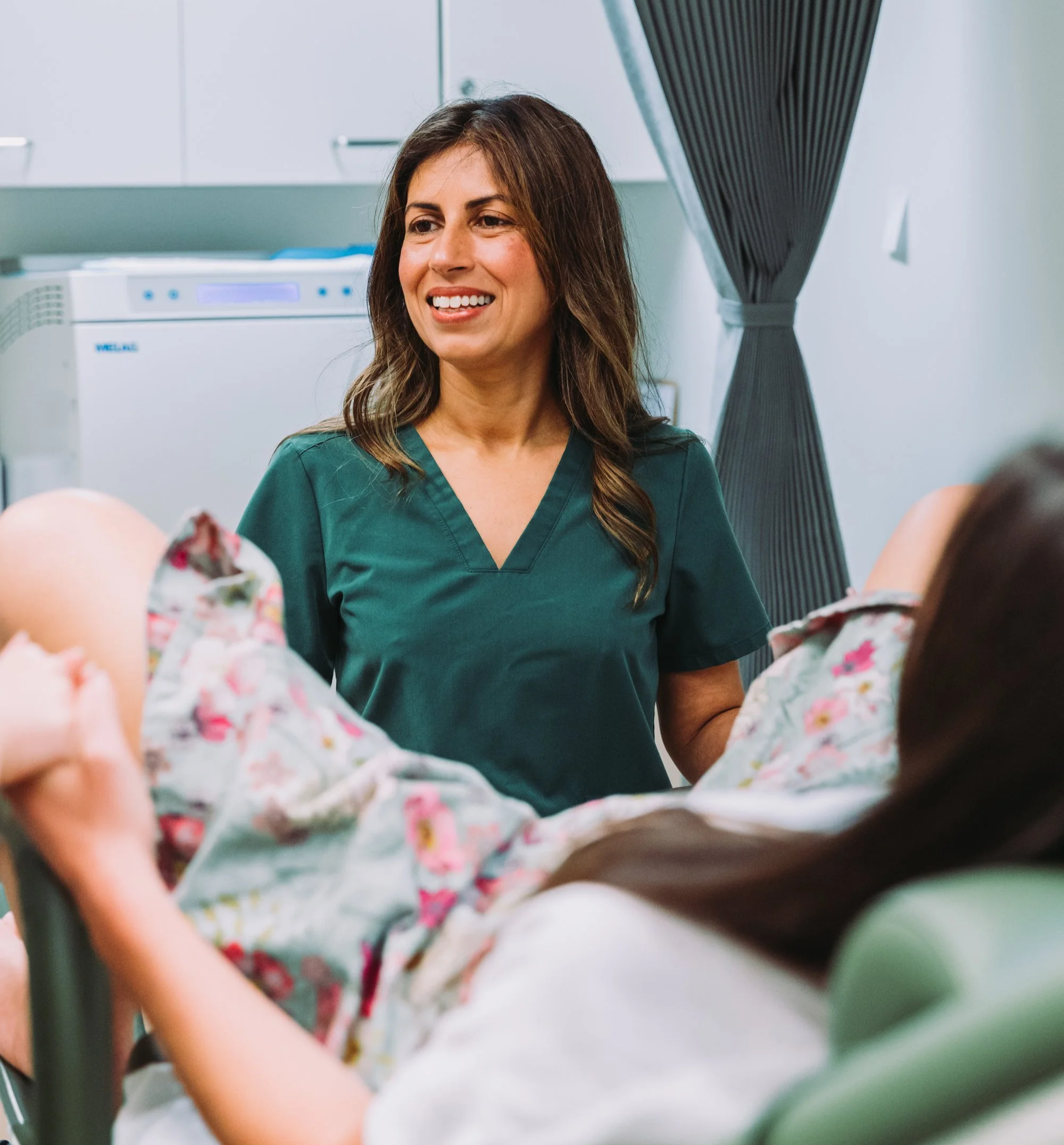
If you choose clinician-collected screening, the test is usually quick. A small speculum is gently placed in the vagina and a soft brush collects a sample from the cervix. It takes a minute or two.
Just as important as the test is how you’re cared for during it. You’re allowed to ask questions, take your time, and let your clinician know if you’re feeling nervous or uncomfortable. You’re always in control of your body and the pace of the appointment.
Making sense of your results
Waiting for results can feel unsettling, so it helps to understand what they usually mean.
If no high-risk HPV is found, that’s reassuring. You’ll be invited back in five years.
If HPV is found but your cells look healthy, you’ll usually be asked to repeat the test in about 12 months. In many cases, the immune system clears the virus on its own and the follow-up simply confirms that.
Sometimes the result means a closer look is needed, often with a test called a colposcopy. This does not automatically mean cancer. It means your care team wants to examine the cervix more closely to stay safe and thorough.
Occasionally a sample can’t be read properly and needs to be repeated. That can be frustrating, but it doesn’t mean anything is wrong.
Knowing when you’re due
Because screening is only every five years, it’s easy to lose track. The National Cancer Screening Register helps with that. By linking it to your myGov account, you can see when your last test was, when the next one is due, and make sure your contact details are up to date so reminders reach you.
It takes the mental load off having to remember.
A gentle reminder
Cervical screening is one part of looking after your gynaecological health, even when you feel well. It doesn’t replace listening to your body. If you notice symptoms like unusual bleeding, ongoing pelvic pain, or changes that don’t feel right, it’s important to talk with your GP or gynaecologist, regardless of when your last screen was.
Rather than seeing the Cervical Screening Test as something to put off, it can help to think of it as a quiet act of self-care. A short appointment that offers years of reassurance.
Get in touch with us, or speak with your GP about a referral. You can also join our newsletter to stay connected with the Wahini ʻOhana and hear about upcoming events and care.